Discussing Effective Lawmaking With Alabama Senator Arthur Orr
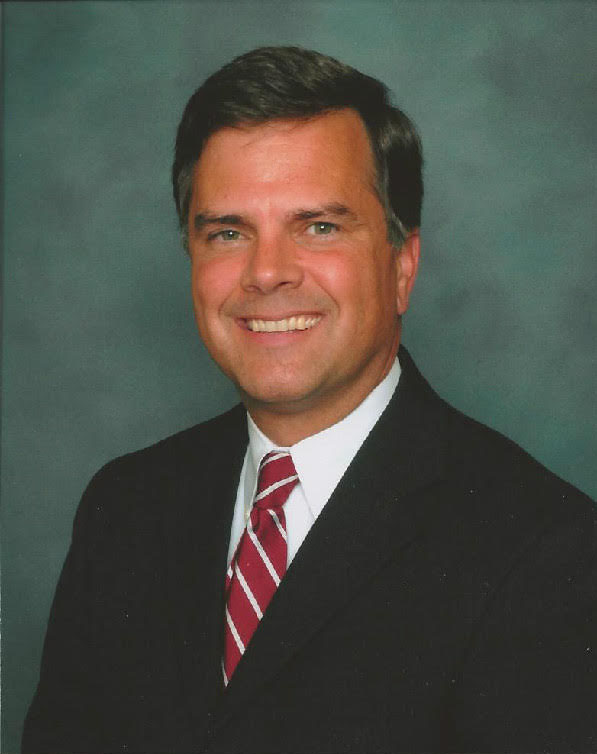
Senator Arthur Orr is a sixth-generation Alabamian, who grew up in Danville, Alabama, where he worked on the Alabama Sheriff’s Boys Ranch. He attended Wake Forest University, and as a student he served as chairman of the university Honor Council, received several academic honors, and held numerous leadership positions throughout the university. This pattern of leadership continued when he attended law school at the University of Alabama in Tuscaloosa, where he earned leadership and academic honors while teaching freshman English and volunteering regularly with Big Brothers/Big Sisters and the Community Soup Bowl.
After graduation, he joined the United States Peace Corps, where he was assigned to a remote Himalayan village in Nepal and conducted teacher trainings throughout the region. He soon noticed that young village girls were getting married off at early ages and were unable to continue their education. So, with the financial help of friends and family, he established a college scholarship program to benefit these girls. To date, several hundred village students have attended college.
After completing his commitment to the Peace Corps, Senator Orr returned to Decatur, Alabama, where he joined the law firm of Harris, Caddell, and Shanks, PC, and served as president of several non-profit organizations. He was selected as the Citizen of the Year by the Decatur Rotary Club, and he received several other awards, including carrying the 1996 Olympic Torch. He was subsequently hired by Habitat for Humanity International for a three-year term, where he helped establish a new Habitat program in Bangladesh and served as legal counsel through the Asia/Pacific region.
After his time with Habitat for Humanity, he returned to Decatur where he joined one of the largest pest control companies in the United States, and he now serves as Executive Vice President of that company. He has also started several businesses and has re-engaged as an active community leader, serving as president of numerous community organizations, including helping to start the Community Free Clinic in Decatur.
Since his election to the Alabama Senate in 2006, Senator Orr has sponsored, and his colleagues have passed, nearly two hundred bills, which have served to increase government transparency, reform education standards in Alabama, tighten campaign finance law, and advance other innovative policies. He helped create the Robotics Technology Park in Limestone County, the Alabama School of Cyber Technology and Engineering in Madison County, and the Alabama Center for the Arts in Morgan County. He has also been a part of business recruitment teams that led to billions of dollars in economic investment and the creation of thousands of jobs over the three counties he represents. He now chairs the Senate Budget Committee for Education and he sits on several other legislative committees. He served as Chairman of the Alabama Bicentennial Commission to celebrate the State’s 200th Anniversary and he is leading Alabama’s effort for America250. For his efforts both in and out of the legislature, Senator Orr has been named to the Yellowhammer News “Power and Influence” list every iteration since the list was first created, designating him as one of the State’s most impactful leaders. He has also received many national, regional, state and local awards from education, business, agriculture, government and volunteer entities. Additionally, a statewide columnist named him the “Most Valuable Legislator” for several legislative quadrenniums.
Advocating for laws based on constituent needs:
“Well… it’s definitely been an easier road than it was when I first began, and certainly in our chamber, and [being] one of the very, very few that have ever served in the minority. So, I understand the challenges that you have as a minority legislator, and to me, it’s not personal, members of our minority party may bring bills that I know is going to cost us a lot of money, or it doesn’t make good sense, fiscally, or whatever the issue is… and I’ll tell them, I just can’t let this go, and it’s the same standard for members of the Republican Party. I appreciate and agree with the ideas of cutting taxes and, trying to spur business and things like that, but we can’t do it all. We can do very targeted things that might help us economically in the long run. But we have schools to fund, prisons to fund, and all sorts of responsibilities that are made up by, revenues coming in, and we’ve got to be very prudent in how we go about it.” [Advocating for laws based on constituent needs connects with our five habits of highly effective lawmakers].
On building a coalition beyond one’s chamber:
“As far as the House is concerned, really showing, respect to our House members [is very important]. Sometimes you get the interchamber, rivalry…..They (The House) are equal colleagues. They are incredibly important. They are 50% of the equation. There may be more members down in the House across the country, but at the end of the day, they are incredibly important, their committee chairs, their rules chairmen, and the whole apparatus in the House. So, working with them, explaining the bill, and as I said….. it’s certainly rewarding when my colleagues see the value of passing good policy for our state.” [Recognizing the importance of building coalitions beyond one’s chamber comports with our five habits of highly effective lawmaking].
On exploring what works in other states:
“At the state level…we can take and see what’s successful elsewhere for the citizens of another state and incorporate it here in Alabama. I learn by going to conferences, by reading a lot, and by listening to other legislators from other states … We have a lot of the same problems, like how are we going to fund Medicaid with the federal rules, how are we going to, have enough to fund education, or to move the needle for our children? All are very similar concerns at the state level, and that’s what I find very helpful, to see what’s worked elsewhere, and try to see if we can’t borrow that and have an Alabama solution for a similar problem.” [Exploring what works in other states coincides with our DEFINE mnemonic, which can be found in our States New Member Guide].
Alan Wiseman (00:00:06.420)
Hello, my name is Alan Wiseman, I’m the Associate Provost of Strategic Projects and Professor of Political Science at Vanderbilt University. And along with Craig Volden at the Frank Batten School of Leadership and Public Policy at the University of Virginia, I co-direct the Center for Effective Lawmaking. Today, in today’s version of our Conversation with Effective Lawmakers video series, we are excited to welcome Arthur Orr, who has served in the Alabama State Senate since 2007, representing Morgan County and parts of Limestone and Madison counties in District 3. Prior to being elected to the Alabama State Senate, Senator Orr served in the United States Peace Corps in Nepal, where he conducted teacher trainings throughout the region, and he’s also practiced law with the firm of Harris, Cato, and Shanks. He also spent 3 years working for Habitat for Humanity International, where he helped to establish a new habitat program in Bangladesh, and he also served as legal counsel throughout the Asia-Pacific region. After his time with Habitat for Humanity, Senator Orr returned to the state of Alabama, joining one of the largest pest control companies in the United States, where he currently serves as Executive Vice President. Senator Orr received his bachelor’s degree from Wake Forest University and his law degree from the University of Alabama in Tuscaloosa. Now, the reason why we’re so excited to speak with Senator Orr is that according to our data at the Center for Effective Lawmaking, Senator Orr quickly established himself as a highly effective lawmaker in the Alabama State Senate shortly after his election in 2006, where he became the second most effective Republican lawmaker in the State Senate during the 2007-2010 legislative sessions. Building on this pattern of legislative success, moving forward, Senator Orr became the most effective Republican lawmaker in the State Senate, which made him actually the most effective lawmaker in the State Senate for the next three quadrenniums, meaning for all legislative sessions between 2011 and 2022. Now, to hit the ground running and be such a successful lawmaker, and to continue this pattern of success for every legislative session in which he was then seated, is really a noteworthy accomplishment, and we’re so excited to sit down with him today to hear about his perspective on the legislative process, and what he deems to be the keys to his success. So, Senator Orr, thanks so much for joining us for the Center for Effective Lawmaking Conversation. We really appreciate your time.
Arthur Orr (00:02:25.930)
Good to be with you, Alan, and I appreciate the effort and the notoriety that the Center has. I was not aware of it until I was contacted, and glad to know that you all are noticing what’s going on at the state level, in state politics, in state policy, and making, and and… trying to draw some conclusions from legislators as far as those that are able to get legislation through that is meaningful for their state.
Alan Wiseman (00:03:20.020)
Great. Well, as I said a little bit earlier, we’re going to plan on just asking you a collection of fairly general questions about your background and your perspectives on things, and the extent to which you could really highlight particular examples from your own experiences is really going to help to provide some context for students and faculty and other scholars who’d be engaging with this interview, so we really appreciate your time. So that said then, why don’t we just, you know, rewind the clock a little bit, and we’d really like to get your perspectives on… really about how your background, and by that I mean before you were actually elected to the Alabama State Senate, how that shaped your approach to lawmaking. So to that end, we’d be really curious to know how your experience serving the Peace Corps and working for Habitat for Humanity influenced your decision to ultimately run for a seat in the Alabama State Senate, and what were you hoping to accomplish upon being elected to office?
Arthur Orr (00:03:50.430)
Well, you know, I believe God puts everybody here to be busy about, you know, trying to improve their area of the world for the greater good, and had never had an exposure to politics in the city council or county commission-type level. But, after a lot of prayer and reflection, I felt like the Lord was leading me to get involved in politics. And at the time in Alabama, the legislature had been in controlled — I don’t want to make this a partisan thing, but controlled by the Democratic Party for, since Reconstruction, and the things that were going on, regardless of party affiliation, were troubling. If… I recall one incident where the shoeshine man in the Alabama State House… State House was given a $5,000 bonus just because, just because. And it just seemed like there were a lot of expenditures and things that were going on that… that just didn’t… didn’t make a lot of sense. So, after, like I said, a lot of prayer and reflection, felt led to get involved in the campaign, and, you know, had no prior knowledge, never worked on a campaign, never done much of anything in politics. So, it was a learning effort, and at that time, my recollection is it turned out to be the most expensive campaign in that… in the state’s history for a legislative seat. It was, very brutal, and my wife reminded me not long ago that I turned off the radio, didn’t want to hear the radio ads, I turned off the TV, because I didn’t want to see the TV ads, I didn’t open the mailbox, because I didn’t want to get those nasty mailers, so to a rookie, it was quite an exposure, but here we are, some 20 years later. And blessed to have been serving in this capacity. As far as what’s helped me along the way, I just attribute it to hard work. And by that, I mean, you know, talking and communicating to other legislators interestingly enough, I don’t sponsor many at all of what I would term as lobbyist bills, or special interest bills, because I’m busy trying to… I hate to admit this, but it’s, to take good ideas, I was going to say the word steal, or borrow, or plagiarize, but I won’t say those words, borrow other ideas from states, good policy ideas that have been effective in their area, and been through the wringer legislatively, and then try to, you know, get them incorporated here in Alabama and passed into the code. Not always successful, but, certainly, you know, we’ve been more successful than not. And, sometimes we have original ideas here that other states take, and, you know, and that’s very gratifying to see them borrow from our state. So what goes around comes around.
Craig Volden (00:07:04.030)
There’s so much to dive into there, I’m not even sure where to start, but but thanks, I guess, first, again, for joining us today. I’m gonna keep us back at the very start of your term, and when you’re coming in, you were saying no campaign experience, no city council experience, and so on. Probably tough to learn the lay of the land when you first arrived. Was there an orientation, or some sort of new member training that you received, or that members receive now? And, put another way, what do you wish you knew then that you know now?
Arthur Orr (00:07:37.950)
Well, there was an orientation, and it’s like the old public broadcasting, just a bill on Capitol Hill, but fortunately, being an attorney, knew the process, knew, you know, of course, our system of government, how it works at the state level, very similar to the federal level. But then there’s the reality, the politics on the ground floor. And I remember in 2007, my first year there, the Democrats, quite frankly, would not let a Republican bill pass. If you had… they just… it just wasn’t gonna happen, and being the new… newbie, on the street. We were 12 to their 23, so a 35-member chamber, 23 to 12. We did have, at that time, about 5 or 6 Democrats that organized with us, voted with us, were very, you know, very aligned with us, and, but, we, we lost the organizational because, we only had about 5 that, that came through for us, but anyway. I recall going to one old chairman who had been there for quite some time, and my bill had been referred to his committee, and he said, I said, well, can I get a hearing? You know, can we get it on an agenda? And he says, well, this committee doesn’t meet. And I said, well. But it’s a committee, I mean, what you… you’re the chairman, you can call it. I mean, so this committee hadn’t met in years. Your bill was sent here to… to die, and it’ll never get out. And good luck, you know, maybe next year, so… just… just lessons like that. They don’t teach you in orientation.
Alan Wiseman (00:09:41.300)
I mean, that definitely points to a pretty steep learning process there. So, you know, as we noted earlier, you know, you really, compared to all other members within your party and in the chamber, you were incredibly successful at advancing your legislative agenda, even from early on in your career. And I would be curious, I mean, in addition to these lessons, you know, how, if at all, do you feel that your approach to lawmaking has evolved over the last 15 to 20 years as you’ve continued to engage with the agendas and the institution, broadly speaking?
Arthur Orr (00:10:02.080)
Yeah, so I hate to admit it, but I’ve become a little bit more… understanding of those that would oppose what I would think are good… policy ideas, and by that I mean, I’ve had legislation, let’s just take, for example, that impacts the medical community. The legislation may not pass because the medical community is very opposed to it for whatever reasons. I don’t agree with those reasons, and I think they’re… not valid reasons for the citizens of the state, but nonetheless, they have a job to do. I hate to admit that I don’t appreciate, I’ll call it defeat, or not being successful in getting a law passed, or that, again, is good policy. But, you know, I’ve learned to accept it more and just move on. Sometimes I’ll come back. Again, if there’s some tweaks or changes, it’s not, you know, not that we can’t sit down and try to work something out, and a lot of times that does happen. And I’d have to say, you know, I don’t… I’m not a very good politician, and by that, I mean I chair the Appropriations Committee. But I have a standing policy. I never lean on members to, you know, vote for something against their conscience, or, you know, they could be very aligned with the medical community, to use my example. And, say, well, if you do that, then the, you know, special appropriation you need over here, or requested over there, that’s not going to happen. I don’t do that. And again, that probably goes back to my being a poor… politician in the truest sense, because, you know, they have reasons for voting the way they do, and I’m not gonna browbeat them or get angry at them. You know, it’s frustrating, don’t get me wrong, I don’t like to lose, and again, I wouldn’t file it if I didn’t believe in it. And think it would be helpful to our state, but, you know, at the end of the day, you need to shake hands and walk away, because to hold vendettas and to be, you know, let your bitterness or anger get the best of you is not, not helpful, personally, and certainly not, in the, in the body.
Craig Volden (00:12:31.050)
So for someone who hates to lose and, getting frustrated, potentially, with something going to a committee to die, I’m just wondering, kind of, how did you feel your approach or strategies changed as you moved from the minority party to the majority party over time? Was that an easier road, or how did it play out?
Arthur Orr (00:12:51.160)
Well… it’s definitely been an easier road than it was when I first began, and certainly in our chamber, and one of the very, very few that have ever served in the minority, so I understand the challenges that you have as a minority legislator, and to me, it’s not personal, you know, members of our minority party may bring, bills that I just, you know, it’s gonna cost us a lot of money, or it doesn’t make good sense, fiscally, or whatever the issue is that… and I’ll tell them, I just can’t let this go. And the same standard for members of the Republican Party. I have, you know, we… Republicans, and to their… you know, I appreciate and agree with the ideas of, you know, cutting taxes and, you know, trying to spur business and things like that, but we can’t do it all. We can do very targeted and, you know, things that might help us economically in the long run. But at the same token, we have schools to fund, you know, prisons to fund, all sorts of responsibilities that, those are made up by, you know, revenues coming in, and we’ve got to be very prudent in how we go about it, though, you know, there are some that would, you know, we just… we wouldn’t be able to, take care of our responsibilities if, if they… if it were their way.
Alan Wiseman (00:14:23.690)
No, that’s really helpful. Just thinking about some of your, public accomplishments or accolades, in January 2026, you were named Alabama Legislature’s Most Valuable Player by Steve Flowers of the Yellowhammer News. So, you know, as you alluded to a little bit earlier, given your committee chair positions as the chair of the Senate Finance and Taxation Education Committee, for example, you’re obviously well-positioned to influence policy in a variety of areas, and I’d be curious to know, from your perspective, how do you, or how important do you think it is to align your personal policy interests, your expertise, and the institutional position, such as being a chair of a certain committee, how important is that alignment for your legislative success?
Arthur Orr (00:15:09.160)
You know. Again, I would like to think, Alan, that it’s because the policy idea is meritorious for our state, and my colleagues see it as going to be helpful to the state, not because this is Senator Orr’s bill and we better pass it. you know, I don’t want them thinking that way, quite frankly. I would… I want them to think, you know, at the end of the day. Will this be good policy for our state? I throw out an example that, you know, in this current 20… or past 2026 session, just a few months ago, had a bill about dark money. And this is money coming in from out of state, where you can’t determine who the donors are. They, you know, the donor set up a non-profit, donate to the nonprofit, the nonprofit turns around and gives huge donations to candidates in Alabama. Or to, you know, various, you know, or gets engaged in advertising, for or against a candidate. So, that, you know, to me, the public has a right to know. Well, the bill, if I’ll… the whomevers did not like it, did not want it, and the bill did not go far in the legislative process. That being said, since then, the campaign of 2026 has really heated up, and all this unidentifiable donor campaign money coming in, has really influenced candidates to say, we’ve got a problem, and they’ve kind of awakened to the issue. And so I say all that to say, hopefully, the timing will be what… good next year, if I’m able to be re-elected, to file a bill like this, because a lot of these candidates have had personal experience. I have not, personally, but now it’s a real… they see it as a real problem. So, I say all that to say this. Timing in the legislative process can be quite, quite crucial based on factors beyond one’s control. And, again, in that example, hopefully the timing will set the stage in 2027.
Craig Volden (00:17:23.160)
Right, that’s interesting. You know, a number of the examples that you’ve given, and we really appreciate you diving into the weeds there with us, have been in areas… I’m hearing campaign finance, I’m hearing some health and medical associations, I’m hearing a little bit about appropriations and tax revenue. When you think across the areas where you’ve sponsored legislation, do you think of yourself as kind of a generalist, picking up on lots of ideas across the way, or a specialist in a particular area? And if you were advising a new senator, would you say, you know, do one thing and do it really well, become a specialist, be the go-to person in that, or would you say, you know, try to help cover the landscape across the board?
Arthur Orr (00:18:08.470)
Yeah, so… good question, excellent question, Craig. So, I, you know… they tell you in politics, become a specialist in one area. And that’s probably the wisest, course, to take. For me, it has not been so. I’ve been all over, and all over. Now, there’s some areas that I will avoid that I just don’t, you get into them, and it’s just a quagmire, and I don’t know enough to engage in deep levels. And so, technology being one of those, but then I would say, you know, I’ve had several bills, regarding AI and technology. One comes to mind where AI can misidentify those with dark complexions and, and cameras in convenience stores, and what happens is, usually those, you know, black or dark brown people get arrested through a misidentification. Well, this required, you know, the bill required a second piece of evidence for, you go off, arresting people because they popped up in an AI profile run through a database of hundreds of thousands, millions of people on driver’s licenses, trying to find somebody who robbed the liquor store or something, so… or the convenience store. So, you know. I get involved in pretty much everything, which may be to a fault, but, you know, for most legislators, they like to stay in an area that they’re, conversant with. I try to give away bills at the beginning of the session, trying to get members to sponsor them, and a lot of times, they’ve got their own things, or oh, I don’t want to handle that, or I’m too busy over here, and that’s understandable, but I feel like, at the end of the day, while I’m there, and it’s just a season, I won’t be there long. Best to be busy, and be engaged and be diligent about the business the people sent you to Montgomery to do, and not… it’s not for the receptions and the parties and the dinners and all the social aspect. That’s part of it, to build relationships, but it’s really about doing the work, and so much in the legislature is about the appropriations, passing budgets, and then, also, you know, the laws and the code of Alabama, and trying to put good policy into code.
Craig Volden (00:20:37.610)
Now, when you’ve been describing a lot of these policy areas and what you’ve put forward, it sounds to me like there’s a problem, and then you try to find a solution, right? Is that kind of how you think about lawmaking from your…
Arthur Orr (00:20:50.020)
Well, sometimes, and a lot of, you know, take, for example, what I’m going to refer to as constituent bills. I had a lady approach me, she had a child that was, getting up into the late primary years, early middle school years. And the child was large, very large, non-communicative, you know, but, still wearing a diaper. And her issue was, I can’t lift him up to those plastic changing tables in public restrooms. He’s too big, and I try to do it in our car, if it’s raining, or this, or that, and we have a, you know, we have a hatchback for this very purpose, trying to lift him up now into the car, I can’t, I can’t do it. So, the point was, what can we do? So, sponsored a bill that would require a motorized, type changing table in public buildings, all public buildings in the state of Alabama after the year 2028, or renovated in a major way, will require the restrooms to have one of these automated changing tables for large children or even adults that need changing, because, you know, this mom says, you know, we go to any event, I’m on the floor with a changing pad in the bathroom, in the open public, you know, the stalls aren’t big enough. And you could just… your heart goes out to people like that, but that was the genesis of a bill. It became the first of its kind in the country, to my understanding, to require this in government buildings. We can certainly afford another $100,000 or whatever it takes for the space needs, and the table that costs $3,000 or $4,000. You know, all these needs, certainly we can do that for members of the disability community that have, this challenge that they have to deal with on a regular basis.
Alan Wiseman (00:22:57.340)
Yeah, I really appreciate you pointing to that specific example, just to highlight the ways in which some of these ideas come organically from your constituents. I never would have had the thought, and never, you know, saw it on… at a conference or something like that, and, came from a constituent, and thankfully, again, my colleagues voted to pass it, and the governor agreed to sign it. That’s great. I’m curious, and to some degree, this next question speaks more to your personality and the way you approach things, which builds a little bit on what Craig was raising, or the questions Craig was posing. But, you know, if someone dives into your biography, outside the legislature, it goes without saying you’ve been extremely entrepreneurial in terms of starting businesses and charitable organizations and engaging with these types of… a wide array of institutions. And I guess, you know, thinking about your experience outside of the legislature, to what degree do you feel that this entrepreneurial spirit, so to speak, has also been helpful in lawmaking, or helpful in engaging with the legislative agenda.
Arthur Orr (00:23:51.910)
Yeah, it’s a good question. I think it’s a blessing, but somewhat of a curse, because it’s like… I can’t think of a better example, but we use it quite frequently, you know, the kid in the candy store, you know, oh, there’s a need over there, oh, there’s a need over there, you know, those kind of things, and in my life, as I’ve… if I’ve… come across needs, or… certain situations, it’s like, if not now, when? You know, you’ve got to do something, and do what you can. I can’t do everything, and that’s obvious, but, take, for example, you talk about earlier in life, it was up in the… in the Himalayan mountains, you know, two and a half days walk from the nearest road with the Peace Corps. And would… when I wasn’t training teachers in the area, I was doing, I was teaching in a village school, and came across where young… young girls, when they would start menstruating, would be married off in arranged marriages, because they had no prospects and one less mouth for… for father to feed. And so, we established… rode home, you know, back then, you know, there was no email, and you got letters, but asked for donations to start a scholarship fund, so worked with some Nepali lawyers and got it all registered with the government and the legal documents, et cetera, et cetera. But impacting the lives of these young girls so they could continue on with their schooling in high school, and then get that diploma, get their school leaving certificate, and then, be able to go to, and I’m gonna do, air quote, college, which, you know, it’s not like it is here, it’s concrete floor, it’s kind of, you know, a lot of technology, etc, but, it is a path to get out of, and get… in those days, be able to see the road and travel in a vehicle, but, interestingly enough, was in London a few years ago and came across… I knew she had moved there because she had sent me a letter, or an email from the internet, and, she was now a nurse in the UK, and had gotten out of the village using the scholarship fund, so… and told me many, many others, so I go back and check on that. But the point is, if you see a need, address it, certainly, if you can, and that’s kind of how I believe, you know, the reason God put me here, and all the rest of us here.
Craig Volden (00:26:26.490)
Now, when I think about, you know, all of the legislators who see some needs and then a need to prioritize, like, what are we going to address in this… in this session, maybe we can’t do it all, does that… sort of agenda setting, fall to committee chairs, party leaders, or how have you seen that all play out?
Arthur Orr (00:26:47.430)
Yeah, so, you know, this isn’t your… you guys’ first rodeo, so you know the drill. And another good question, so I… for me. I put it out there, you know, you could… you could go ad nauseam trying to run all the traps, as they say. You know, getting, you know, if you got a bill, we had one for title fraud this past session. And that’s where people basically get their houses and their property stolen from beneath them, because our system of recording and validation is, in the 20th century. And we need 21st century type validations, because there are a lot of fraudsters out there where they just go up to the… this is simplistic, but go to the courthouse and have a deed that they’ve signed and had a fake notary notarize and said that you sold your house to them, and now it’s theirs, and then they quickly try to resell it and get the proceeds, and as the, quote, owner. So, that bill took a lot of running the traps, but I had somebody doing that for me on other bills, I’ll file them, see who comes out, see who’s opposing, see who’s supporting, because it’s hard for me to take a lot of time to prejudge and, you know, call this association, call that group, call that entity. Are you good with this bill on banking, or whatever the issue is, because they all have opinions, it all takes time. So, I’ve just kind of learned, file the bill, see who, what bubbles up, who comes out against it, and then try to go from there and work with any opponents or supporters and try to get it passed.
Craig Volden (00:28:36.420)
I imagine sometimes those discussions lead you to re-evaluate. I hadn’t thought of that aspect of the bill, and so on. How do you kind of weigh that out over time?
Arthur Orr (00:28:47.730)
Yes, when we’re talking about the amendments, yes, there are times when associate, you know, people in that space, in that industry, say, well, did you think, you know, did you and the bill drafter think about this? And, you know, the attorney that I’m working with to draft the bill? And so there are those times, but generally, you know, have been able to… it’s kind of… guess what opposition may… they may have and where they’re coming from. And then, on the language, see if we can work it out, or add a paragraph here or there without compromising the integrity of the issue and trying to address the issue.
Alan Wiseman (00:29:42.410)
I’d like to shift gears slightly, Senator. You know, thinking about where the Alabama State Senate, or really the Alabama Legislature, broadly speaking, stands in comparison to other places. You know, it seems like some state legislatures are structured and governed in ways that function more smoothly than others, bluntly speaking, whether it’s a function of how many days they’re in session, how committees work, including the example you pointed to, the role of the majority party, whether or not they have professionalized staff and the like. And from your vantage point, given that you’ve now been serving for close to 20 years, do you feel that the Alabama legislature is structured in a well-functioning way to engage with the state’s policy problems, or do you think that there’s potential reforms that’d be constructive for Alabama to think about?
Arthur Orr (00:30:17.060)
So… generally, I think it is structured in a good fashion, you know, as far as being able to do the things that we need to do. Sometimes, I believe, we are a little compressed on time, but I’m also a little bit fearful that if we gave more time, it would just stretch out the… I’m gonna call it the inevitable, and that’s not a bad thing, but just stretch things out. It’s kind of like having a term paper, and it’s due at the end of the semester, and so many people don’t get serious about that term paper until, you know, a few weeks before the end of the semester. So they let it just sit and fester and not pay attention to it. So I fear if we gave additional time to the legislative process in Alabama. We might, be similar. We’d still be in a hurry-up mode, and be somewhat, perhaps, lackadaisical if we had more time at the beginning, and just not buckle down and do what we need to do early on, like we usually do.
Craig Volden (00:31:26.870)
Are there still committees that don’t meet and just serve as, graveyards for bills?
Arthur Orr (00:31:32.770)
Not, not currently. That was, you know, all the committees, still act now. You do have chairmen, and I’m… guilty as well. I had bills in my committee, members want, and I say, I don’t see how we can afford to give that tax credit to that particular special interest group. That takes from the revenues that we have, and I can’t understand the case of how our state will be improved if we gave that up. And, if we did, I can name 4 or 5 others that will be right in line after them, wanting similar accommodations that would hurt funding education and other needs in the state if we were to go down that road.
Craig Volden (00:32:20.810)
I want to return now to something you raised in the very beginning of our time together about learning from ideas that are adopted in other states, or when you come up with something that’s really novel, helping spread the word to those other states. Can you tell us kind of a little bit more about what that process is? You know, how are you connected to other lawmakers or other ideas?
Arthur Orr (00:32:43.860)
So… Yeah. Yeah, so, you know, I… again, you’ve heard it said, the states, and again, I appreciate what you gentlemen are doing, you know, Vanderbilt and Virginia, and give… and I know you also have attention on the… at the federal level. But at the state level, you’ve heard it said many times, laboratory of democracy, and we can take and see what’s successful elsewhere for the citizens of another state and incorporate it here in Alabama. I learn, by going to conferences, by reading a lot, by, listening to other legislators from other states, say, you know, well, we had legislation on this, or that, or whatever, the issues they’re facing. We have a lot of the same problems, be it, you know, how are we gonna fund Medicaid with the federal rules, how are we gonna, you know, have enough to fund education to move the needle for our children. What are we going to do about our prison situation and overcrowding? All… very similar, concerns at the state level, and that’s what I find very helpful, to see what’s worked elsewhere, and try to see if we can’t borrow that and have an Alabama solution for a similar problem that we may have here domestically.
Craig Volden (00:34:08.909)
How much do you find that you have to kind of modify an idea found elsewhere to the situations in Alabama?
Arthur Orr (00:34:16.100)
Generally, there’s always gonna be some modification necessary, but, in principle, the, the framework stays the same, and, is very, is very helpful. I recall a bill back during the Great Recession, for pension reform. And, you know, all the states were in big trouble with their state pension plans, and so we had to do something similar here, and it’s… turns out, you know, which… you know, which levers are you going to pull to get the end result that you need? Some states would do it some way, others the same way, but we were able to accomplish that and wind up with a pretty solid pension plan for new hires. And, but grandfather all those that were currently in the system then, but it saved our state billions of dollars that, quite frankly, we did… we couldn’t afford to… to, spend, because people, thankfully, are living much longer than they were back when those pensions were established in the 60s and 70s.
Alan Wiseman (00:35:24.070)
I’d be curious to, just to turn back to some points about legislative strategy. I really appreciate the emphasis you’ve been placing on, really, the virtue of your own ideas, and hopefully winning over other legislators to, appreciating how useful some of these new policies could be. But it also seems that, you know, to really get in the weeds, to be as successful as you have been, you obviously need to cultivate support within the Senate, but it also seems you need to really be actively cultivating support in the other chamber, as well as maybe the governor’s mansion. So I’m curious, you know, to what degree, when you’re trying to advance your ideas, are you really actively reaching out to people in the House and or the Governor’s mansion to make sure that everyone’s on the same page, or are you focused largely on, let’s just move this to the Senate and see what happens after that?
Arthur Orr (00:36:13.340)
No, excellent question, but, you know, take it step by step, and, you know, I’ve got a lot going on with, you know, I do file, admittedly, a considerable number of bills. And because they all interest me, I will file, as a courtesy, what we call our Alabama Law Institute bill, which is our legal think tank that we, you know, have, you know, model bills, etc. But other than that, they’re usually me and a staffer, an attorney, coming up with the, you know, the solution to a certain problem, and sometimes we have an out-of-state, legislation as a guide, sometimes we don’t. But… you know, going… the communication to the committee chair, to the members on the committee, touching base with them, I’ve kind of learned, you know, where your problem areas are going to be. And then as far as the House is concerned, really showing, respect to our House members. Sometimes you get the interchamber, rivalry, and being in the Senate, there’s this, you know, the House of Lords, and, and, you know, and they, we’re just the, you know, down here, the people’s house, and, you know, they’re equal colleagues. They are incredibly important. They’re 50% of the equation. There may be more members down in the House across the country, but at the end of the day, they’re incredibly important. They’re committee chairs, they’re rules chairmen, the whole apparatus in the House. So, working with them, explaining the bill, and as I said. These aren’t lobbyist bills. That’s what makes so easy, if you’re doing something for, say, the banking community, you just sign your name, the banking community will make sure it gets put on a committee agenda, will make sure it gets put on a special order calendar to get a vote in the chamber. When it goes to the House, they’ll do likewise. you just have to show up and explain the bill. There’ll be a House sponsor to the bill. So all those, kind of… wrinkles are worked out, and the pathway is gilded for you when you have those type bills. Unfortunately, I take it the hard way, and but, you know, it’s certainly rewarding when my colleagues see the value of passing good policy for our state.
Craig Volden (00:38:46.280)
We definitely want to be respectful of your time, and so just a few final questions. One comes because we are located at the University of Virginia and Vanderbilt University. We wonder if there are some words that you’d like to share with college students across the country.
Arthur Orr (00:39:03.530)
Absolutely, and that would be to be engaged. So much of what I do as a state legislator happens within the bubble. And I would say, even in Washington, there’s so much more that happens outside of Fox News, or MSNBC, or any of the network news channels, or, you know, behind the scenes, the the gears of government or lawmaking, are… they’re not hidden, but they’re part of the, again, what I term the bubble, and it’s important for your students to understand what’s going on behind the scenes, if they’re interested in it. They may not have any interest in it, but if you are, peer behind the veneer and learn what’s going on, get engaged at the state level, the county level, the city level, or the national level, whatever. But our country needs you. It needs our young people being engaged, because I’ll tell you this, those, that have an interest, and it’s special, and you know what I’m saying, they’re very engaged, and they very much know what’s going on. So, for your average citizen student that’s interested in government at any level, plug in and get engaged, and because your country, your county, your state, whatever, they need you.
Alan Wiseman (00:40:47.020)
This is live television for you. So, sadly, our time’s up, and as I said, we really appreciate the opportunity to talk with you about your perspectives on things, and really just to thank you for your public service. You know, as a final wrap-up, however, we also want to give you the opportunity to really just comment on, or tell us about anything else about effective lawmaking in the state of Alabama that perhaps we haven’t touched on, or you think it’s important for people to be aware of.
Arthur Orr (00:41:13.350)
Yeah. I think I’ve touched on it all. I just, again, I want to thank you all and thank the two universities for your interest and, your, your… your study of what’s going on at the state level. Again, I was not aware of it, and how important that is to those of us, laboring up here in flyover country, if you will, because it’s important work, and it’s important for our country, and it certainly adds up, and a lot of decisions are made, as you well know, at the state level, and sometimes it is overlooked between local governments and federal governments, and I… appreciate your interest in what you’re doing, what your departments are doing, and your universities, to shine a light on it, and hopefully through this process, we can improve all of our states across the country, and that’s better for the people that I represent, and certainly people that you associate with on a daily basis. So thank you all. For, your dedication to this. It was certainly a pleasant surprise.
Craig Volden (00:42:22.780)
Well, thanks for your recognition, and for all of your public service.
Arthur Orr (00:42:27.250)
Right.
Alan Wiseman (00:42:27.750)
Thank you very much.
Arthur Orr (00:42:28.680)
Thank you.
Craig Volden (00:42:29.790)
Bye now.